How systematic writing assessment led to enhanced teacher efficacy and student achievement
About the school
Deebing Heights State School, an Independent Public School situated in a southern suburb of the City of Ipswich, Queensland, educates just over 700 students. It opened in 2016 and is a co-educational school that caters for Prep to Year 6 students.
The Challenge
Early in the foundation of the school, the leadership team at Deebing Heights established a clear and successful process for assessing, planning and teaching reading. The school recognised the value of systematic collection, analysis and mapping of data, and wanted an equivalent approach for writing. In particular the leadership team identified several related concerns about their writing program:
- a lack of consistency in how writing assessments were administered
- teachers’ lack of confidence in assessing writing, and
- a need for greater instructional support in the teaching of writing.
Why did they choose Brightpath?
The school admin team selected Brightpath as it provided a research-based framework that mirrored the school’s approach to assessing, planning and teaching reading. They felt Brightpath aligned with the school improvement agenda and supported staff performance planning goals.
Teachers reflect on the use of Brightpath at Deebing Heights
The Brightpath team recently met with Chloe Heinrich, Year 5 teacher and Leaderof Curriculum and Inclusion for Year 6; Signe Langi, Year 4/5 Leader of Curriculum;and Donna Whitman, Head of Department, Student Services and active member of the English Vertical Team.
The meeting provided a wonderful opportunity to speak with expert educators and hear their detailed reflections on how Brightpath has supported the effective assessment and teaching of writing at Deebing Heights.
The Deebing Heights team discussed how the use of Brightpath has made a difference at their school. They noted that Brightpath has led to:
- Consistent, efficient assessment and feedback practices based on a quality-assured marking continuum
- Improves teaching of writing across the school
- Enhanced feedback and conversations with students about their writing
- Developed assessment and moderation processes
- Reduced teacher workload
Consistent, efficient assessment and feedback practices based on a quality-assured marking continuum.
Teachers greatly value the way in which Brightpath clearly shows the increasing complexity and progression of writing skills from one year level to the next.
As a result, Brightpath has supported teachers in developing a consistent approach to teaching writing and a shared understanding of authorial choices and writing conventions. The school admin team has observed that the detailed terminology provided in Brightpath, about writing development, is now embedded in classroom lessons and used to create “Bump It Up” wall visuals which allows students to regularly engage with the language of writing success criteria.
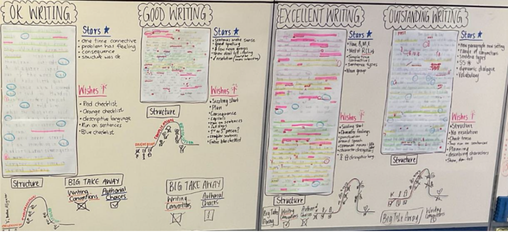
The consistent use of a shared language has helped students develop a stronger understanding of writing expectations and achievement standards. Embedding this terminology throughout lessons has also strengthened teacher clarity when modelling writing skills and providing feedback to students. – Donna Whitman
Improved teaching of writing across the school
Prior to using Brightpath, teachers at the school focused on the teaching of the conventions of writing (spelling, punctuation, and grammar). Since implementing Brightpath, teachers now have a far greater understanding of the need to teach the authorial aspects of writing. These are the aspects of writing authors manipulate to achieve their effect. They include style and voice, tone, text structure, vocabulary, and ideas.
The team observed that the use of Brightpath has resulted in their teachers having greater confidence in teaching the less apparent authorial aspects of writing development. They have found that their teachers now read and discuss writing through a broader lens and there is a more balanced approach to writing instruction and clearer targeted feedback for students.
As readers will appreciate, assessment alone does not lead to improved student learning. The school has found that Brightpath contributes to the improved teaching of writing because teachers can readily match students to targeted learning goals and they have greater confidence in identifying students’ next steps in learning and teaching to their students’ point of need.
Brightpath has equipped teachers with a range of new strategies to support writing instruction and improve student understanding of the writing process. Through the use of authorial choices and writing conventions, teachers have been able to more explicitly teach the features of effective writing and guide students in understanding how these elements impact the quality of their work. – Signe Langi
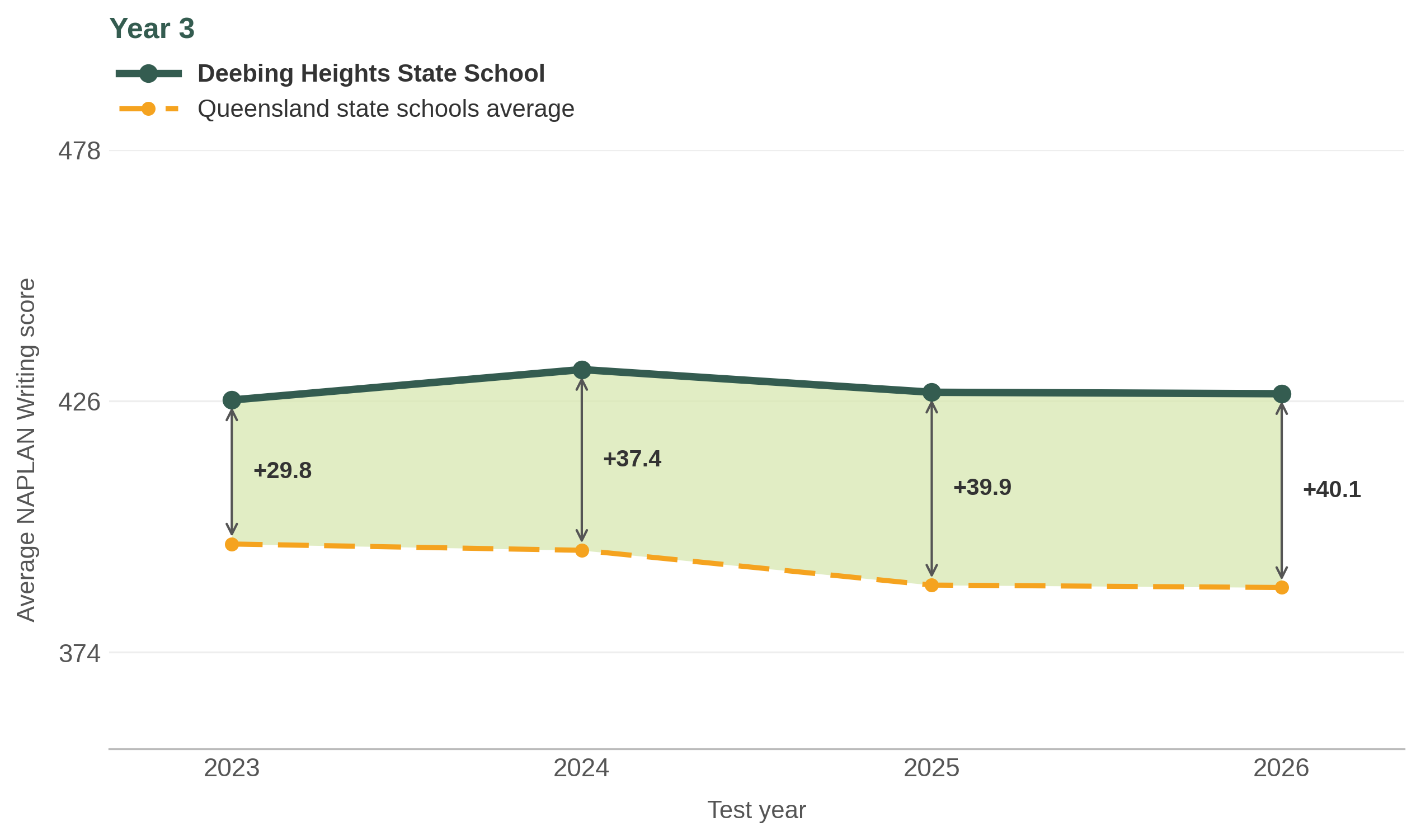
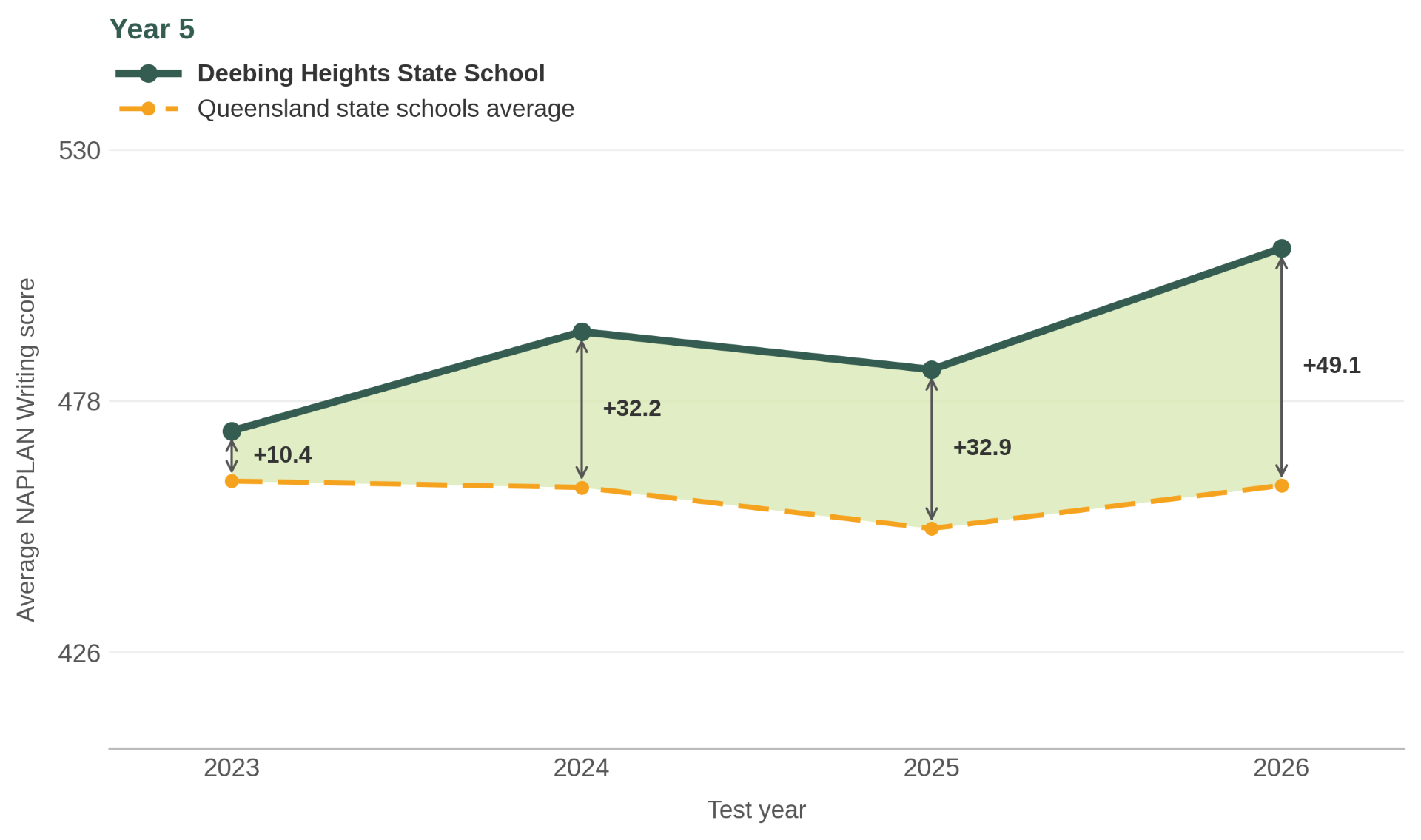
Deebing Heights Year 3 and Year 5 writing performance in NAPLAN
Enhanced feedback and conversations with students about their writing
Brightpath has strengthened the way teachers at Deebing Heights provide feedback to students. Their teachers use the language of the Brightpath criteria and exemplars more consistently, allowing feedback to be more specific and purposeful. This has also encouraged richer conversations between students about writing and improvement strategies.
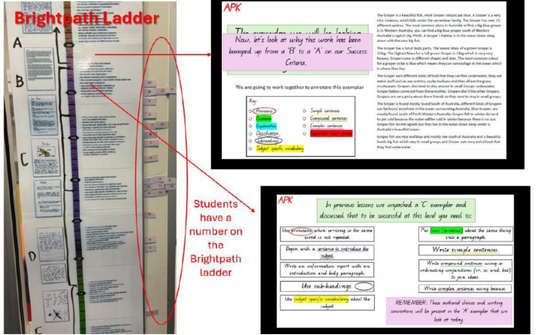
The use of “Bump It Up” visuals and interactive exemplar activities have become more purposeful within classrooms. Students actively examine exemplars, identifying writing elements, and discussing why certain pieces of writing demonstrate higher achievement levels.
Students have developed a clearer understanding that strong writing is made up of a range of different elements and skills that can be improved over time. – Chloe Heinrich
Teachers have noticed that their students have a more strategic, metacognitive approach to their writing. They check for the required text elements, structure, punctuation, and language features against success criteria. They more consistently review their work to ensure key components such as paragraphs, sentence variety, and text-specific features are included during planning and writing time.
Qualitative improvements in student writing are evident, particularly in students’ confidence and efficiency during the writing process. Students are more willing to independently generate and record their ideas rather than spending excessive time deliberating over whether their ideas are “right” or “better.” This has supported greater writing fluency and improved time management during assessment tasks.
Developed assessment and moderation processes
As mentioned in the introduction, in 2022 Deebing Heights State School sought a writing assessment program to strengthen teachers’ confidence in assessing writing and to address concerns about inconsistencies in how writing assessments were administered across the school.
The school has subsequently found Brightpath to be a valued solution. Their teachers can now readily view student writing development across cohorts as well as report against the Queensland Curriculum and Assessment Authority (QCAA) achievement standards.
The school has worked hard to learn how best to refine their assessment and moderation processes. It took time for teachers to appreciate the importance of aligning assessment conditions with Brightpath expectations.
Support was provided throughout the implementation process through professional development sessions, year-level moderation meetings, and vertical moderation sessions across Prep to Year 6. These collaborative opportunities allowed teachers to analyse the Brightpath exemplars, discuss their scores, and ensure consistency of marking across the school.
Teachers have gained confidence in using their professional judgement alongside Brightpath. They appreciate that Brightpath is a supportive moderation tool that improves teacher judgement rather than replacing it. The school now confidently uses teacher assessments of their students’ writing to evaluate the success of their teaching programs.
Reduced teachers’ workload
Teachers initially expressed concerns about “double marking”, as student work was being assessed against both QCAA requirements and Brightpath scoring criteria. Planning meetings were used to ensure curriculum alignment with Brightpath expectations and terminology. The school is now confident that Brightpath aligns closely with curriculum expectations, achievement standards and marking guides.
A further and unexpected benefit of Brightpath was the reduced need for cluster moderation with neighbouring schools, saving teachers a considerable amount of time.
Final comments: Advice for schools starting their Brightpath journey
Deebing Heights staff value Brightpath. However, as with the implementation of all new initiatives, teachers need time and support to learn a new program. The school’s leadership provided teachers with plenty of time to navigate new processes and build confidence in the platform.
Teachers find the platform easy to navigate, however, they need time to learn how to assess their students’ work against the calibrated Brightpath exemplars. The team said that this time was well spent as they now have greatly improved marking processes across the school and importantly there is a far greater understanding of how to teach both the authorial aspects of writing as well as the conventions.
Acknowledgement and thanks
We would like to acknowledge and thank Chloe Heinrich, Signe Langi and Donna Whitman, for providing us with very detailed descriptions and discussion about how Deebing Heights State School uses Brightpath. We learnt a great deal from them and we are delighted to share their journey with you.